Pancha Bhoota Stalam

The Pancha Bhoota Stalam (Five Elements Temples) refers to five ancient and holy temples of Lord Shiva in South India, each dedicated to one of the five prime elements of nature. According to Hinduism, the entire universe and the human body are composed of these five elements (Bhootas).
To bless mankind and maintain the balance of nature, Lord Shiva manifested himself in the form of five distinct Lingams representing:
Earth (Prithvi) – Stability and Foundation
Water (Appu) – Purity and Life
Fire (Agni) – Transformation and Energy
Air (Vayu) – Movement and Breath
Ether/Space (Akasa) – Infinite Consciousness
Visiting these five sacred shrines as a single pilgrimage (Yatra) is considered a path to spiritual liberation, bringing health, wealth, and inner peace to the devotee.
1.Kanchipuram - Ekambareswarar Temple (Earth / Prithvi)

Significance: This temple represents the Earth element. It is one of the oldest temples in India, standing as a symbol of stability and devotion.
Unique Feature: The main Shiva Lingam here is made of Sand (Prithvi Lingam). Legend says Goddess Parvati created this Lingam with her own hands and worshipped it under a mango tree.
Key Highlight: The 3,500-year-old sacred Mango Tree inside the temple complex is a miracle; it has four branches, each representing one of the four Vedas, and each branch produces mangoes with a different taste.
Architecture: The 190-feet tall Raja Gopuram is one of the tallest in South India, showcasing the grandeur of Vijayanagara architecture.
2.Thiruvanaikovil - Jambukeswarar Temple (Water / Appu)
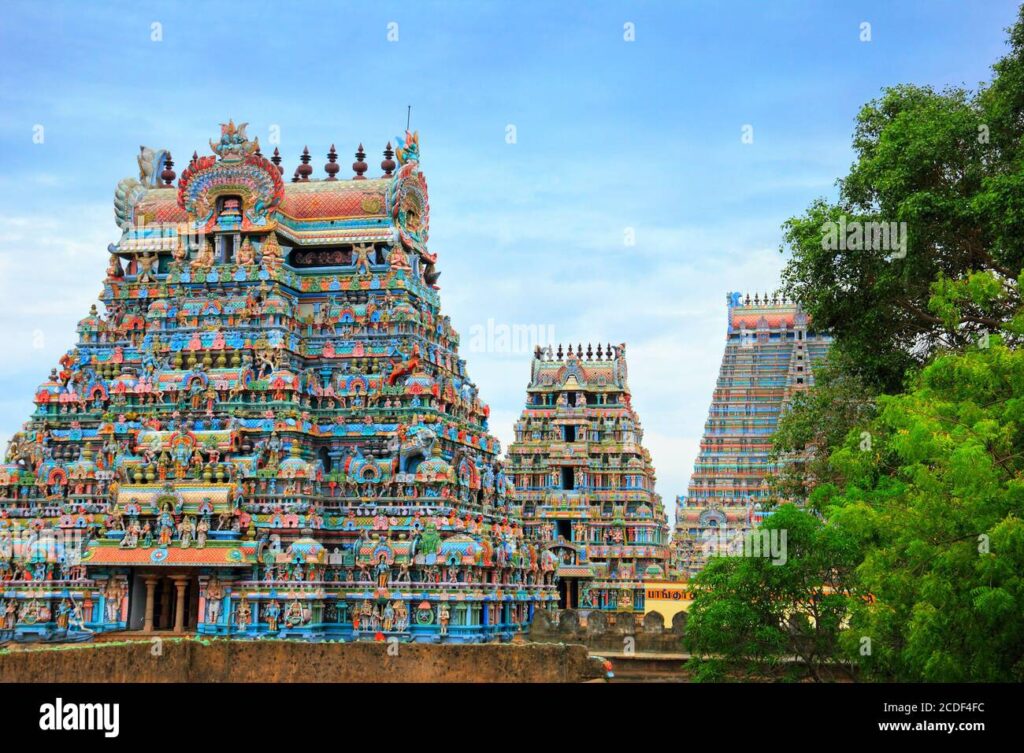
Significance: Located in Trichy, this temple represents the Water element.
Unique Feature: The Appu Lingam (Water Lingam) is located in the inner sanctum where a natural underground spring constantly flows. Even today, you can see water bubbling around the Lingam, regardless of the season.
Key Highlight: Here, Lord Shiva is worshipped as a student and Goddess Akilandeswari as the Guru. The temple follows a unique tradition where the priest dresses as a Goddess during the noon puja.
Architecture: The temple has five massive enclosures (Prakarams) and is known for its intricate stone carvings and monolithic pillars.
3.Thiruvanamalai - Arunachaleswarar Temple ( Fire /Agni)
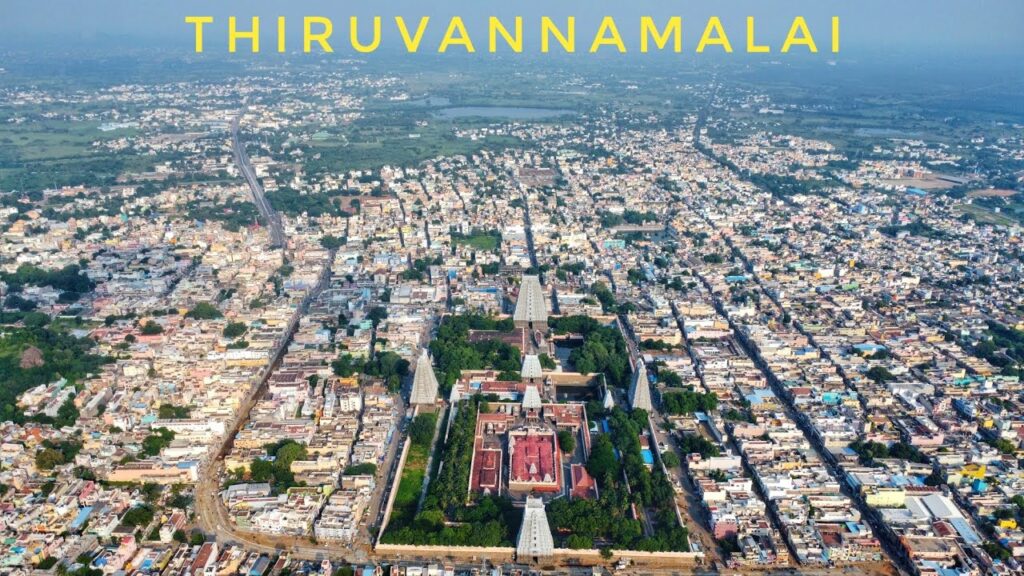
Significance: Representing the Fire element, this is one of the most powerful spiritual centers in the world.
Unique Feature: Lord Shiva is worshipped here as Agni Lingam, representing the eternal flame of wisdom that destroys ego.
Key Highlight: The sacred Annamalai Hill is considered the physical form of Lord Shiva himself. Millions of devotees perform Girivalam (walking around the 14km hill) every full moon to receive divine energy.
Architecture: It is one of the largest temple complexes in India (25 acres), featuring nine towers (Gopurams) and the beautiful Thousand-Pillar Hall.
4.Sri Kalahasti - Kalahasteeswarar Temple (Air /Vayu)
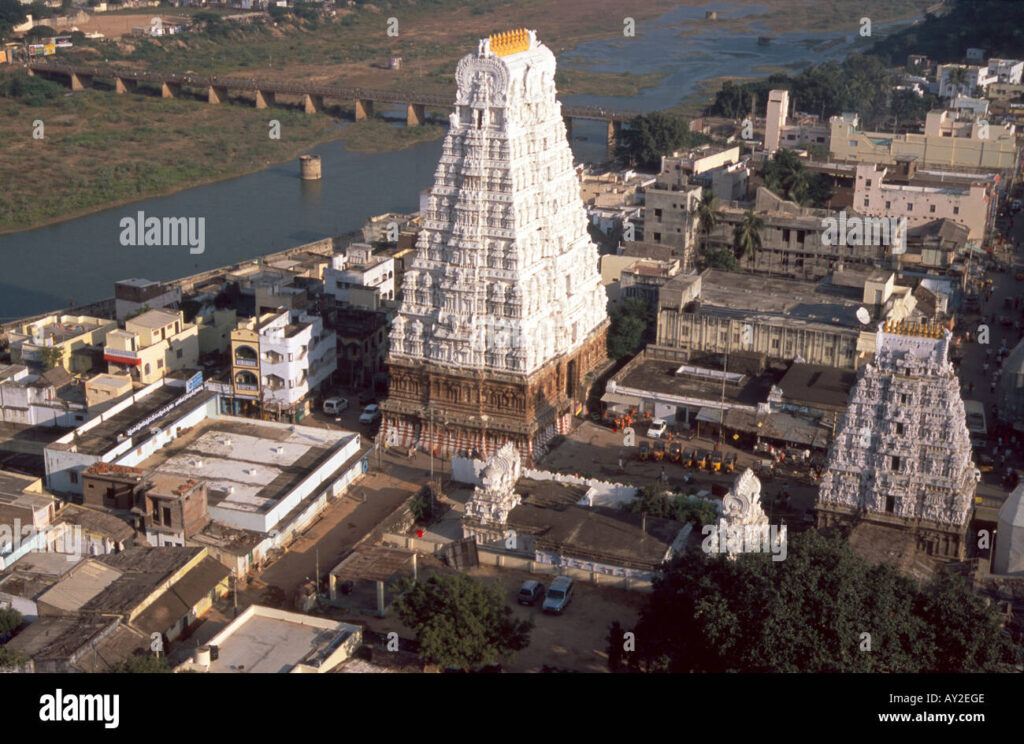
Significance: Located on the banks of the Swarnamukhi River, this temple represents the Air element.
Unique Feature: In the inner sanctum, where there are no windows or fans, the flame of a lamp constantly flickers, proving the unseen presence of the Lord as Vayu (Air).
Key Highlight: It is world-famous for Rahu-Ketu Sarpa Dosha Parihara Pujas. It is the only temple that remains open during solar and lunar eclipses while others are closed.
History: This is where the Great Devotee Kannappa offered his eyes to Lord Shiva, earning eternal salvation.
5.Chidambaram - Natarajar Temple (Ether / Space /Akasa)
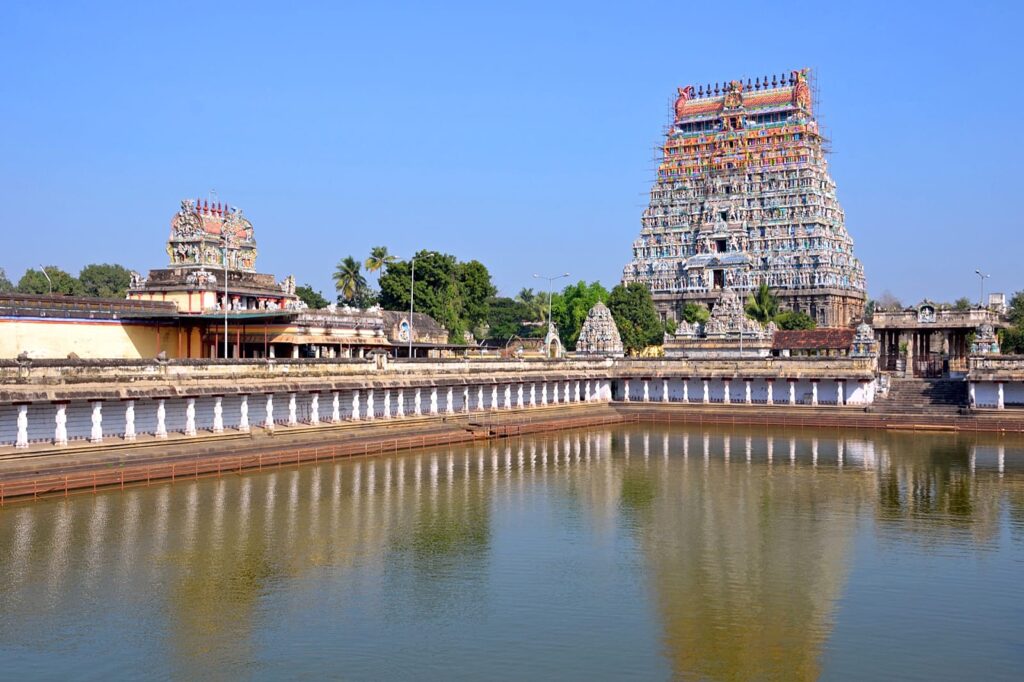
Significance: This temple represents the Ether or Space element, the most subtle of the five.
Unique Feature: Unlike other temples where Shiva is a Lingam, here He is worshipped as Lord Nataraja, the Cosmic Dancer. It also features the “Chidambara Rahasyam”—an empty space behind a curtain that represents the formless Divine.
Key Highlight: The roof of the sanctum is made of 21,600 Golden Tiles, representing the average number of breaths a human takes in a single day.
Philosophy: This temple is considered the “Heart of the Universe” and represents the ultimate truth that God is everywhere and in everything.